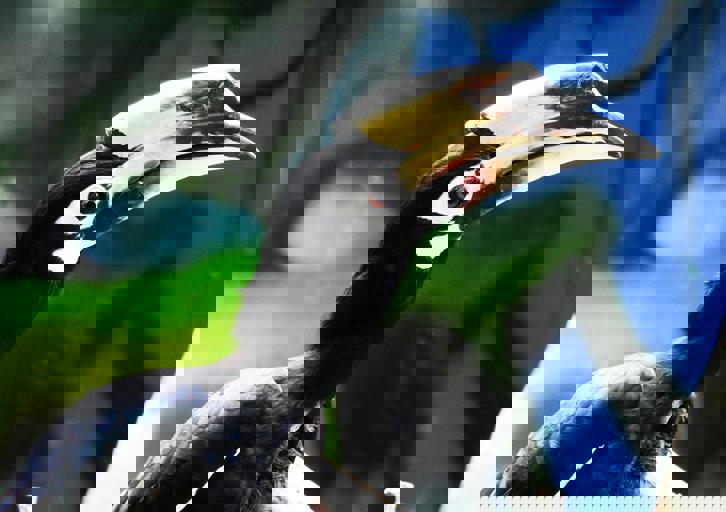
In a stroke of extraordinary luck, a group of wildlife photographers recently encountered one of Malaysia’s rarest avian treasures—the hornbill—during a challenging trek through dense rainforest. This thrilling event unfolded in the early hours of the morning, when subtle sunlight filtered through the thick, leafy canopy, creating ideal yet fleeting conditions for observation. The excited group was reportedly en route to a lesser-known waterfall when the distinct silhouette of the hornbill caught their attention, perched high among ancient trees.
The hornbill, often regarded as a symbol of Malaysia’s rich biodiversity, is notoriously elusive due to its preference for remote and undisturbed habitats. According to Dr. Nurul Izzat, an ornithologist with the Malaysian Nature Society, “Spotting a hornbill in the wild requires patience and a deep understanding of the forest’s rhythms. Their sharp eyesight and secretive nature make such encounters uniquely special.” The group's success quickly made waves within the community of nature enthusiasts and adventure trekkers alike.
Hornbills are not only captivating for their grandeur and impressive beaks but also play a critical ecological role in maintaining the health of rainforest ecosystems. These birds are known as ‘farmers of the forest’ because they help disperse seeds from various fruits, facilitating plant growth and regeneration. Wildlife guide Suriati Hassan remarked, “The presence of hornbills indicates a well-preserved ecosystem, as they thrive only where forests are healthy and undisturbed.”
The photographers fortunate enough to document this hornbill sighting managed to capture a series of stunning images, showcasing the bird’s vibrant colors and massive bill with remarkable clarity. These images quickly found their way onto social media platforms, drawing thousands of likes and shares. Many commenters expressed awe and gratitude for the opportunity to witness such rare rainforest inhabitants, even if only through photographs. One visitor commented, “This sighting gives hope for the future of Malaysia’s wildlife.”
Encounters like this have reignited conversations surrounding conservation within Malaysia, particularly regarding the ongoing threats faced by hornbills due to habitat loss and illegal poaching. According to the Department of Wildlife and National Parks, hornbill populations have suffered significant declines over recent decades, leading to intensified efforts for habitat protection. “The excitement surrounding this sighting is a reminder of what’s at stake and why we must prioritize rainforest conservation,” said department spokesperson Aziz Rahim.
Wildlife tourism has increasingly been recognized as a powerful tool for conservation, with proper management ensuring both environmental protection and educational value for visitors. Adventure tour operators have reported a spike in bookings from travelers eager to catch a glimpse of Malaysia’s rare fauna, highlighting the economic benefits of preserving wildlife habitats. Tour guide Kamal Azlan stated, “These experiences create lifelong ambassadors for local biodiversity, reinforcing the need to protect our natural heritage.”
In response to rising interest, forest authorities have issued fresh guidelines encouraging responsible birdwatching and wildlife photography. These include maintaining a respectful distance, minimizing noise, and strictly avoiding baiting or disturbing the animals. Conservation NGOs are also stepping up educational programs, aiming to increase public awareness about the fragility of hornbill populations and the broader rainforest ecosystem. The synergy between education and stewardship remains crucial for the continued survival of these remarkable birds.
As the buzz from this exceptional sighting continues, many hope it will inspire ongoing commitment from both locals and tourists to safeguard Malaysia’s forests. The rainforest, often described as the country’s beating heart, remains a sanctuary for countless rare species. Sightings of iconic animals like the hornbill serve as both a celebration and a clarion call—affirming the wonders that yet await discovery, provided their habitats are given the protection they so urgently require.